
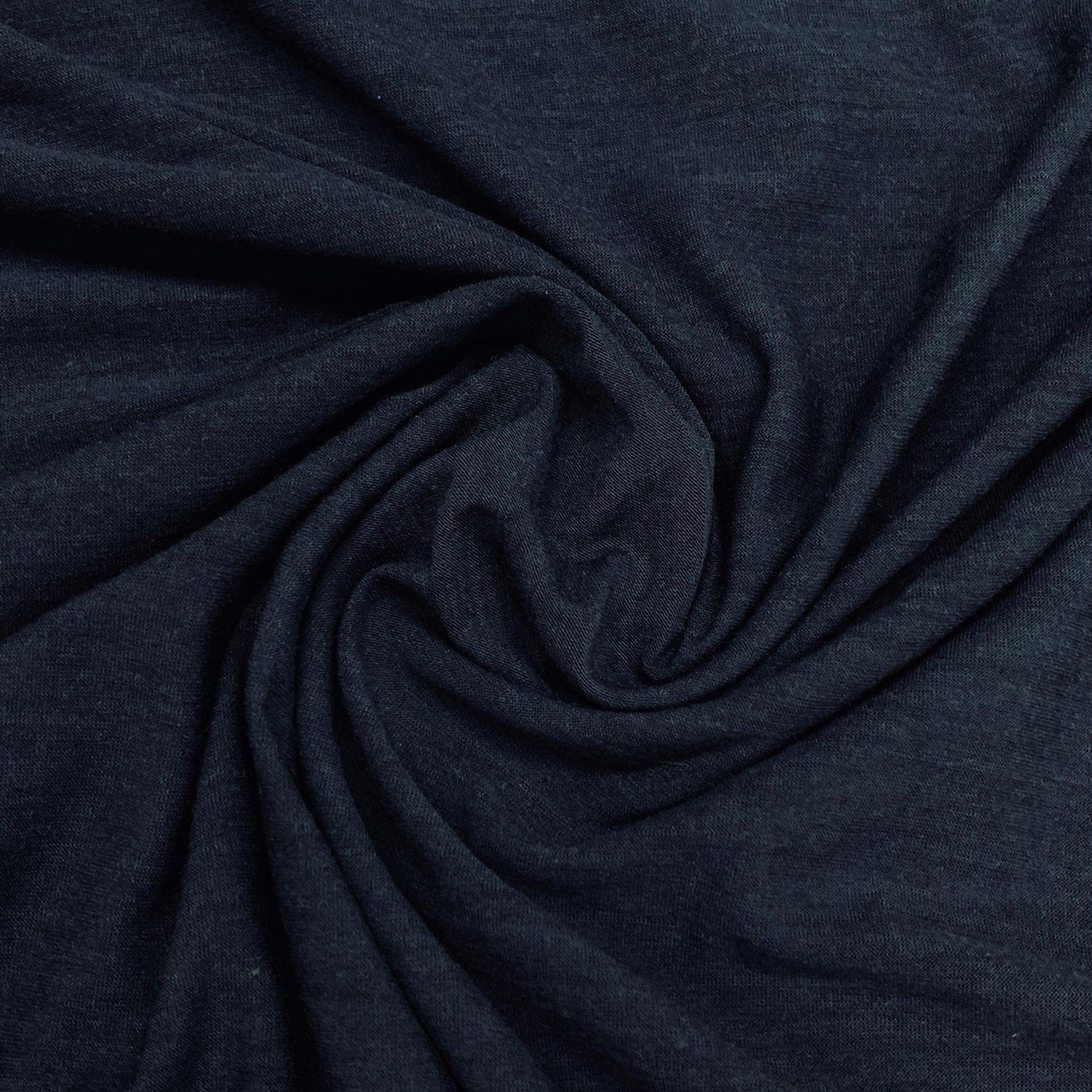
Walk into any pro shop. Pull a polo off the rack. Read the label.
Polyester. Every time.
The golf industry settled on synthetic fabric decades ago and never looked back. It was cheap to produce, easy to brand, and "performance" enough to satisfy a market that did not ask hard questions about what performance actually means.
Meanwhile, merino wool has been the performance standard in outdoor and military applications for years. Mountaineers trust it at altitude. Special operations units wear it in the field. Endurance athletes layer it in conditions where failure is not an option.
Golf missed it entirely.
What You Are Actually Wearing
Polyester is a petroleum-based plastic. The technical name is polyethylene terephthalate, or PET. The same material as water bottles and food packaging, extruded into fiber and woven into the shirt on your back.
Polyester is not naturally "Moisture-wicking". It is a chemical finish applied to the surface of the fabric during manufacturing. That finish degrades with washing and wear. After a few dozen cycles through the machine, the wicking performance diminishes. The shirt still feels the same. It just stops doing what the label promised.
Odor resistance on polyester requires antimicrobial treatments, often silver-ion based, applied as another surface coating. These wash out over time as well. After 20 to 30 washes, the treatment is largely gone. The permanent "gym smell" that sets into synthetic shirts is not a mystery. It is the fabric doing exactly what its structure allows: harboring bacteria.
The "performance" you are paying for is a series of coatings, not the fabric.
How Merino Wool Works
With merino, the fiber is the technology developed by Mother Nature. Not a coating on top of it. Not a spray. The material itself.
Temperature Regulation
Merino fibers have a natural wave-like crimp structure that creates tiny air pockets within the fabric. These pockets act as insulation in cold conditions and allow airflow in heat. The fiber responds to your body temperature and the ambient environment, actively regulating comfort in both directions.
Polyester has no thermoregulation. It wicks moisture to the surface. That is the extent of its temperature management. On a summer morning that starts at 62 degrees and climbs to 88 by the back nine, polyester does nothing to bridge that gap. Merino is comfortable in both conditions
Odor Resistance
Merino's odor resistance is permanent because it operates at the fiber level, not as a treatment.
The surface of each merino fiber is covered in overlapping scales, similar to shingles on a roof. This irregular surface makes it physically difficult for bacteria to attach and colonize. Fewer bacteria means less odor production.
Merino also retains trace amounts of lanolin, a natural wax with mild antimicrobial properties. This is not added during manufacturing. It is part of the fiber as it grows on the sheep.
The result: mountaineers and long-distance hikers regularly wear the same merino base layer for five to seven consecutive days without washing. On the golf course, this translates to wearing the same polo for two full rounds and having it still smell fresh.
Polyester, by contrast, is a smooth-surfaced fiber that provides an ideal environment for bacterial colonization. Bacteria attach easily, multiply rapidly in the warm and moist conditions next to your skin, and produce the odor compounds that no amount of detergent fully removes from synthetic fabric.
Moisture Management
This is where the difference is most misunderstood.
Polyester wicks moisture to the exterior surface. It does not absorb it. The fiber itself takes on less than 1% of its weight in moisture. This means sweat sits on the surface of the fabric, where it either evaporates or accumulates until you feel soaked.
Merino operates on a different principle. The outer layer of each fiber is hydrophobic, repelling liquid water. The inner core is hygroscopic, actively absorbing moisture vapor. Merino can absorb up to 30% of its weight in moisture vapor before it feels wet to the touch.
In practical terms, polyester feels damp at saturation levels where merino still feels dry. On a humid August morning or a sticky afternoon on the Gulf Coast, this is not a marginal difference. It is the difference between thinking about your shirt and forgetting it is there.
UV Protection
Merino wool provides natural UPF 25 to 50+, depending on fabric weight and weave density. This protection is inherent to the fiber and does not degrade when the fabric gets wet or after repeated washing.
Cotton offers UPF 5 to 8, and it drops further when wet. Polyester varies depending on weave and finish, but the protection is not a natural property of the fiber.
For a round of golf that puts you in direct sunlight for four to five hours, permanent UV protection built into the fabric is not a bonus feature. It is a baseline expectation.
Side by Side
The comparison across every meaningful performance metric:
| Property | Merino Wool | Cotton | Polyester |
|---|---|---|---|
| Moisture absorption | 30% of weight (vapor) | 7% of weight (liquid) | <1% (surface only) |
| Odor resistance | Natural, permanent | Minimal | None without chemical treatment |
| Thermoregulation | Active, bidirectional | Passive, fails when wet | None |
| UV protection (UPF) | 25-50+ (permanent) | 5-8 (worse when wet) | Varies |
| Wet feel | Dry until 30% saturation | Wet at 7% | Wet at 1% |
| Biodegradable | Yes | Yes | No (sheds microplastics) |
| Wrinkle resistance | Natural | Poor | Moderate |
| Fire resistance | Ignites at 570°C | 255°C | 252°C |
The data is not ambiguous. Merino outperforms polyester and cotton in every category that matters on the golf course. For a closer look at each property, see
Why Every Golf Brand Uses Polyester
If merino is the better fiber, why does every brand use polyester?
Three reasons.
Cost. Polyester is cheap to produce at scale. Raw material is inexpensive. Manufacturing is fast. Margins are wide. Merino wool costs more because the fiber is more expensive, the supply chain is more specialized, and the production requires more care.
Supply chain inertia. The apparel industry built its infrastructure around synthetic fiber. Factories are tooled for it. Suppliers are optimized for it. Shifting to natural fiber requires rebuilding relationships, retooling processes, and accepting smaller batch sizes. Most brands will not do that.
Marketing. It is easier to sell "technology" than a natural fiber. Polyester lends itself to buzzwords: moisture-wicking technology, engineered performance, and advanced fabric systems.
The result is an illusion of variety. Walk down the polo wall in any pro shop. Dozens of brands. Hundreds of styles. Same material. The logos change. The fabric does not.
What You Notice on the Course
The specs tell part of the story. The course tells the rest.
The first thing you notice is the feel against your skin. Merino is softer than any synthetic you have worn on a golf course. No plastic cling. No static. No synthetic sheen that catches light and announces "athletic wear."
The second thing is what you do not notice by the turn. No odor. No damp patches under the arms. No urge to pull the fabric away from your body because it is sticking.
By the back nine, if conditions have shifted, if the morning cool has given way to afternoon heat, you are still comfortable. The fabric adjusted. You did not think about it. You did not need to.
That is the real test of a performance fabric. Not the spec sheet. Not the marketing language. The real test is whether you think about your shirt during a round. With merino, you do not.
---
The golf industry will catch up eventually. Natural fibers will find their way into the mainstream.
Until then, there is Audere.