
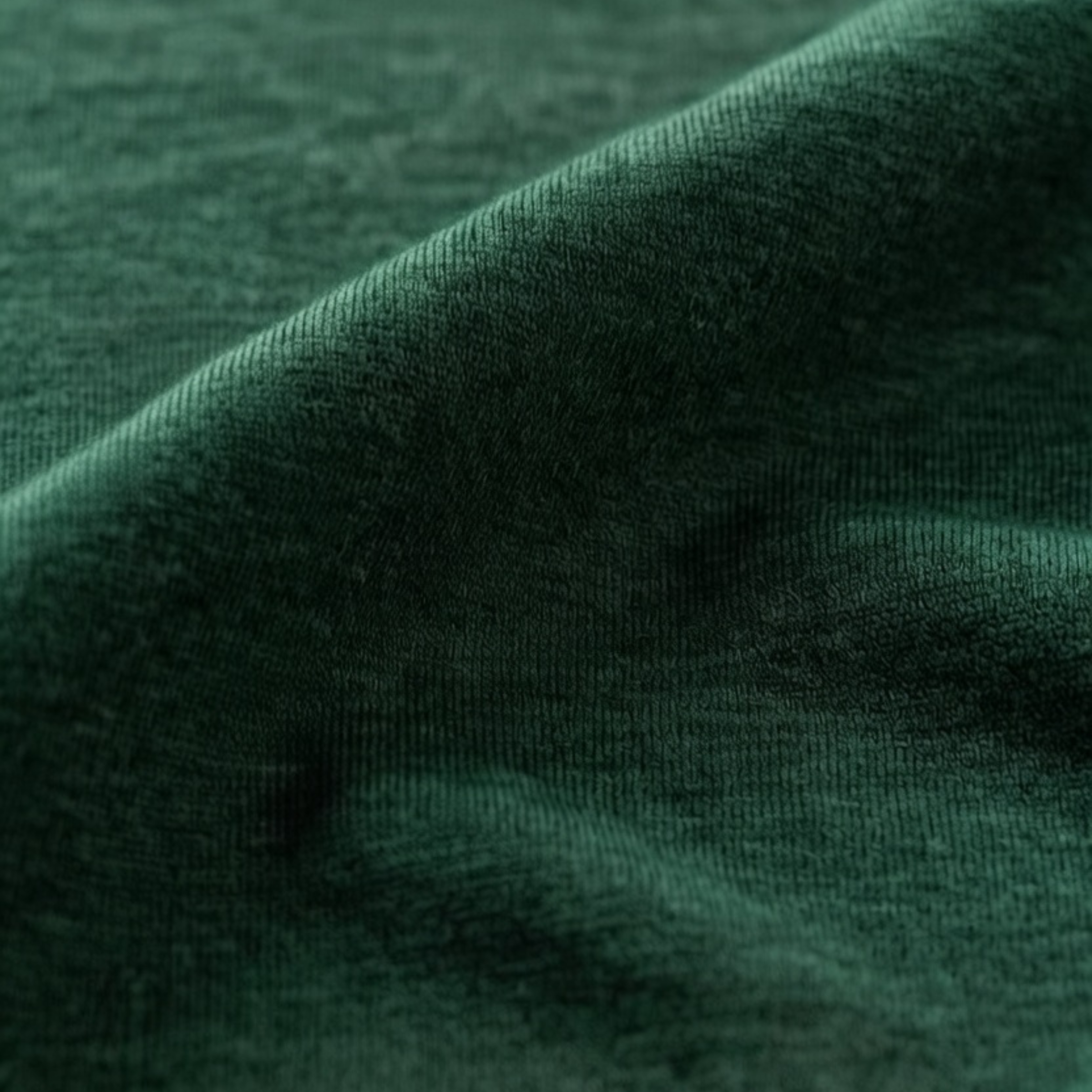
The Fabric
Merino Wool. Choose Substance.
The Fiber
What is Merino Wool?
Merino Wool comes from Merino sheep, a breed originally raised in Spain and now farmed primarily in Australia and New Zealand. What makes it different from the coarse, scratchy wool of old sweaters is the diameter of the fiber.
Merino measures 17 to 19 microns. That is finer than a human hair. At that diameter, fibers bend on contact with skin rather than poking into it. The result is a fabric softer than most cotton.
Each fiber has a crimped, coil-like structure that creates natural elasticity and thousands of tiny air pockets. Those air pockets are the reason merino regulates temperature, manages moisture, and resists odor without any chemical treatment.
The performance is built into the fiber itself. Not sprayed on. Not washed out after 30 cycles.
The outdoor industry figured this out decades ago. Mountaineers, endurance athletes, and long-distance hikers moved on from synthetics years ago.
Golf never caught up. Until now.
The Comparison
Merino vs. Cotton vs. Polyester
Every golf brand selling polyester calls it performance fabric. The comparison tells a different story.
| Property | Merino Wool | Cotton | Polyester |
|---|---|---|---|
| Moisture Absorption | 30% of weight (vapor) | 7% of weight (liquid) | Less than 1% |
| Odor Resistance | Natural and permanent | Minimal | None without chemical treatment |
| Temperature Regulation | Active, both directions | Passive, fails when wet | None |
| UV Protection (UPF) | 25-50+ (permanent) | 5-8 (worse when wet) | Varies |
| Feels Wet At | 30% saturation | 7% saturation | 1% saturation |
| Biodegradable | Yes | Yes | No. Sheds microplastics. |
| Wrinkle Resistance | Natural | Poor | Moderate |
On the Course
How Merino Performs
Temperature Regulation
Merino does not just wick moisture to the surface and call it a day. The crimped fiber structure creates air pockets that trap warmth when it is cool and allow airflow when it is hot.
On a morning that starts at 62 degrees and climbs to 88 by the back nine, Merino adjusts. Polyester does not. This is the difference between a fabric that reacts and a fabric that manages.
Moisture Management
Polyester moves sweat to the surface. It does not absorb it. The fiber takes on less than 1% of its weight in moisture. So sweat sits on the fabric until it evaporates or until you feel soaked. Merino works differently.
The outer layer repels liquid water. The inner core absorbs moisture vapor, up to 30% of its weight, before it feels wet to the touch. On a humid afternoon, that is the difference between thinking about your shirt and forgetting it is there.
Odor Resistance
This is where merino separates itself entirely. The surface of each fiber is covered in overlapping scales that make it physically difficult for bacteria to attach. Fewer bacteria, less odor.
Merino also retains trace amounts of lanolin, a natural wax with antimicrobial properties. This is not a coating. It is part of the fiber as it grows.
Hikers wear the same merino layer for a week without washing. On the course, you can play two full rounds, and the shirt still smells fresh.
UV Protection
Merino Wool provides natural UPF 25 to 50+, blocking over 96% of harmful UV rays. This protection is inherent to the fiber.
It does not degrade when wet or fade with washing.
Comfort
Fine merino under 18 microns is softer than most cotton. No plastic cling. No static. No synthetic sheen.
The natural elasticity means the fabric stretches with your swing and returns to shape. It wrinkle-resists naturally. You can pull it from a suitcase and wear it to the course.
Machine Washable
Cold water, gentle cycle, tumble dry low. That is it. Merino gets softer with every wash. No special detergent. No dry cleaning. No delicate handling.
Sustainability
Natural From Start to Finish
Merino Wool is grown by sheep using water, air, sunshine, and grass. It is 100% renewable. Sheep produce a new fleece every year. It is 100% biodegradable. When a Merino garment reaches the end of its life, it decomposes in soil within years, returning nutrients to the earth.
Polyester is petroleum. It does not biodegrade. Every wash releases microplastic fibers into the water supply. Every garment that reaches a landfill stays there.
Join the Waitlist
We launch soon. Leave your name and email to be first to know, and first to wear it.